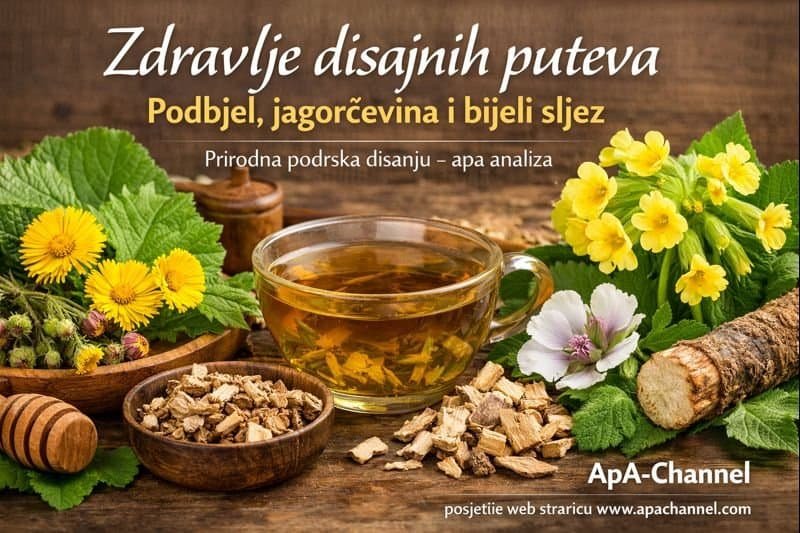
Respiratory health it represents the basis of vitality, and medicinal herbs such as sycamore, jagorčevina and marshmallow are traditionally used as a natural support for breathing. At a time when air pollution, seasonal viruses and respiratory problems are increasingly common, respiratory health is becoming one of the key pillars of overall well-being. Although modern medicine offers effective pharmacological solutions, nature has provided us with plants that have been traditionally used to support the respiratory system for centuries. Among the most famous are subbjel, jaggery and marshmallow - plants that modern phytotherapy still studies today because of their mild but targeted action.
This text represents apa analysis their traditional uses, known active ingredients and safety aspects, with the aim of informed and responsible use.
Respiratory health and the role of medicinal herbs
The respiratory tract is exposed to dust, microorganisms and irritants from the environment every day. When inflammation occurs, the mucous membrane can become irritated and the natural cleaning mechanism (mucociliary system) slowed down. In such situations, certain medicinal plants are traditionally used as support – not as a substitute for therapy, but as a supplement to the body's natural defense mechanisms.
Phytotherapy in this context most often distinguishes between:
expectorants - plants that facilitate the excretion of secretions
demulcents – plants rich in mucus that soothe and protect the mucous membrane
The effect of air on respiratory health it especially comes to the fore when we talk about the quality of the environment, which we wrote about in more detail in the apa guide Positive and negative ions – how air affects health on ApA-Channel.
1. Buckwheat (Tussilago farfara) – a traditional herb for coughs
Coltsfoot is a plant that has been used in folk medicine for centuries, especially for coughs and respiratory tract irritation. Its Latin name Coltsfoot comes from the word cough (cough), which indicates its historical purpose.
Traditional properties of subwhite:
contains plant mucilage which can relieve mucosal irritation
it was traditionally used for dry and mixed coughs
it is often mentioned in old phytotherapeutic records as an herb for short-term use
Important safety note:
Coltsfoot contains pyrrolizidine alkaloids, substances that in long-term and uncontrolled use can burden the liver. Therefore, today it is recommended:
short-term use only
avoidance in children, pregnant women and people with liver diseases
using only tested, controlled preparations
In modern phytotherapy, coltsfoot is considered a plant that requires special caution and responsibility.
2. Primrose (Primula veris) – natural expectorant
Primrose is a well-known plant in the European herbal tradition, especially its root, which is used as a herbal expectorant.
Traditional use of jaggery:
contains saponins which can contribute to the dilution of bronchial secretions
traditionally used for productive (wet) coughs
often part of herbal mixtures for the respiratory tract
In phytotherapy, jagorčena is seen as a plant that can support natural cleansing of the respiratory tract, especially when thick secretions are present.
According to the European Medicines Agency (EMA), herbal preparations are classified in Europe as traditional herbal medicines with clearly defined purposes and restrictions. https://www.ema.europa.eu/en/homepage
How to use herbal teas responsibly
Herbal mixtures can be used as support, but not as a substitute for medical therapy. Moderation, quality of raw material and individual differences are the key factors.
Example of a mild tea blend:
primrose + marshmallow
short-term use
breaks between courses
Conclusion: nature as an ally, not a substitute
Podbjel, jagorčevina and marshmallow represent an important part of the European phytotherapy tradition. Their value lies in to support the body's natural processes, with a clear understanding of boundaries and security aspects. The approach to medicinal plants should be informed, measured and responsible - exactly the way ApA philosophy fosters.
📌 Note (ApA standard):
Note: The content is for informational purposes only and does not replace individual advice from a doctor or pharmacist.
The VW Golf through generations best shows how a car can transcend technology and become part of a region's identity. Key Takeaways The VW Golf through generations as a car
Forever Immune Gummy vitamins represent a modern approach to supplementation, combining 10 vitamins and zinc in the convenient form of two gummies per day. 1. Key Takeaways This app
This ApA brain teaser presents five challenges through which you can test your knowledge about medicinal plants and check how connected you are with nature. Solve the tasks below, think first
Subaru design and drivetrain are not just technical details — they are a brand philosophy that defines stability, longevity and safety in real-world driving conditions. Key messages
The highest quality Aloe Vera preserves its structure, purity and nutritional value thanks to a controlled processing process. This is not marketing – it is methodology.