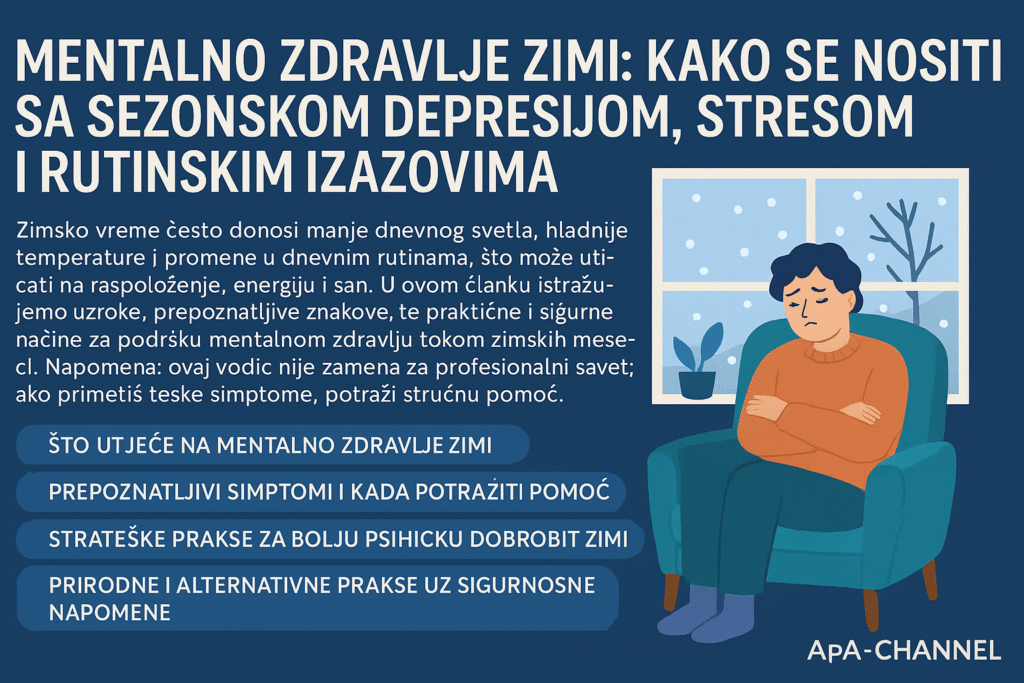
Mental health in winter: how to cope with seasonal challenges
Winter often brings less light, cold and changes in routine, which can negatively affect mental health in winter. Many people experience seasonal challenges such as low energy, mood swings, and sleep disturbances. In this ApA article, we explain why seasonal depression occurs, how to recognize the symptoms, and what practical methods can help improve your mental state during the cold months.
Note: If you notice severe or long-lasting symptoms - be sure to seek professional help. This text is a support but not a substitute for a doctor.

Why winter affects mental health
Lack of light and seasonal depression (USA)
Shorter days and less sun can disrupt:
- production of serotonin (good mood hormone)
- regulation of melatonin (sleep hormone)
- circadian rhythm
This can cause low energy, sleep changes and feelings of sadness.
Coldness and reduced movement
Winter often "locks" us indoors:
- less physical activity
- less socializing
- more insulation
All this affects mental health.
Stress and pressure of obligations
Holidays, work, finances, and family obligations often increase:
- stress
- exhaustion
- feeling overwhelmed
Biological factors
Changes in hormones can affect:
- mood
- focus
- motivation
- sleep quality
Recognize the signs – when it's time to get help
Symptoms to look out for
- prolonged sadness
- loss of interest in activities
- changes in appetite
- sleep changes (too little or too much)
- difficulty concentrating
- feelings of worthlessness or hopelessness
If these symptoms last for several weeks – seek help.
Emergency symptoms
Seek help immediately if:
- there is a risk of self-harm
- symptoms suddenly worsen
- the person ceases to function in everyday life
Children and teenagers
In younger people, winter changes can look like:
- withdrawal from society
- changes at school
- emotional outbursts
- sudden drop in energy
If you notice these changes - talk to a pediatrician or a psychologist.
Practical habits to improve your mood during winter
Light and light therapy
- Walk during the day whenever you can.
- Keep the curtains wide open.
- Light light therapy can be helpful, but with the recommendation of an expert.
Alt text for light image:
Natural daylight through the window to support mental health in winter.
Sleep regulation
- Go to sleep and wake up at the same time.
- Avoid screens 1-2 hours before sleep.
- Do not overdo it with caffeine and alcohol.
Physical activity
Even 20–30 minutes a day can:
- reduce stress
- increase serotonin
- improve focus and sleep
Examples: home workouts, brisk walks, stretching, light yoga.
The BBC wrote about how the winter period affects the mental state of many people, especially due to the lack of light and reduced activities.https://www.bbc.com/serbian/lat/srbija-63705220
Nutrition and omega-3 fatty acids
Healthy food = healthy brain.
Recommended:
- nuts
- fish
- green vegetables
- fruit
- whole grains
If you're interested in learning more about how food affects mood, check out our guide on diet and omega-3 fatty acids on ApA-Channel where we explain how these nutrients can support mental health in winter. https://apachannel.com/forever-omega-3-artic-sea/
Social connection
Do not isolate yourself - in the winter it will only worsen the symptoms.
- socializing
- video calls
- activities with family
- walking together
Stress management
Try:
- deep breathing
- mindfulness
- meditation
- hot tea and a quiet routine of gratitude
- short breaks during the day
- If you want to learn more about gratitude, you can also look at our article about it on ApA-Channel, where we explain how a small daily practice changes mood and energy.
Setting realistic goals
Small daily goals increase a sense of control and reduce stress.
Limiting alcohol
Alcohol can:
- increase depressive symptoms
- to disturb sleep
- increase anxiety
In winter, this is especially evident.
Natural approaches with safety notes
Herbal teas and supplements
Teas:
- chamomile
- lemon balm
- linden
- mint
Supplements (on medical advice):
- omega-3
- vitamin D
- magnesium
Never take supplements on your own if you are using therapy.
Mindfulness and meditation
Short sessions 5–10 minutes:
- reduce stress
- increase focus
- improve mood
Mood diary
Helps track:
- trigger
- emotional patterns
- progress over time
When to avoid the alternative
If:
- you have serious symptoms
- you are thinking about changing therapy
- Are you taking antidepressants?
Always consult a doctor.
When to seek professional help
If:
- symptoms last longer than 2–4 weeks
- interfere with work, school, or relationships
- thoughts of self-harm arise
- changes are becoming intense
Look for a psychologist, psychiatrist or general practitioner.
Let's talk together.
- What strategies help you stay positive during the winter?
- Leave a comment below - maybe your recommendation will help someone else.
- Share the article with friends and family.
- If you want ApA tips directly to your inbox, subscribe to our newsletter.
Safety note
This article is for educational and informational purposes.
It is not a substitute for professional advice or therapy.
If you notice serious symptoms, loss of control or thoughts of self-harm - seek professional help immediately.