Why does your hair deserve more than chemicals?
Most commercial shampoos we buy in local markets are based on aggressive detergents (sulfates) that provide rich lather, but in the long run destroy the natural barrier of the scalp. If you are dealing with chronic itching, dandruff or lifeless hair, the problem is probably not in your genetics, but in the bottle you use every other day.
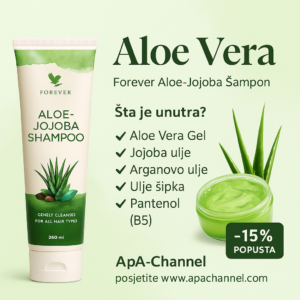
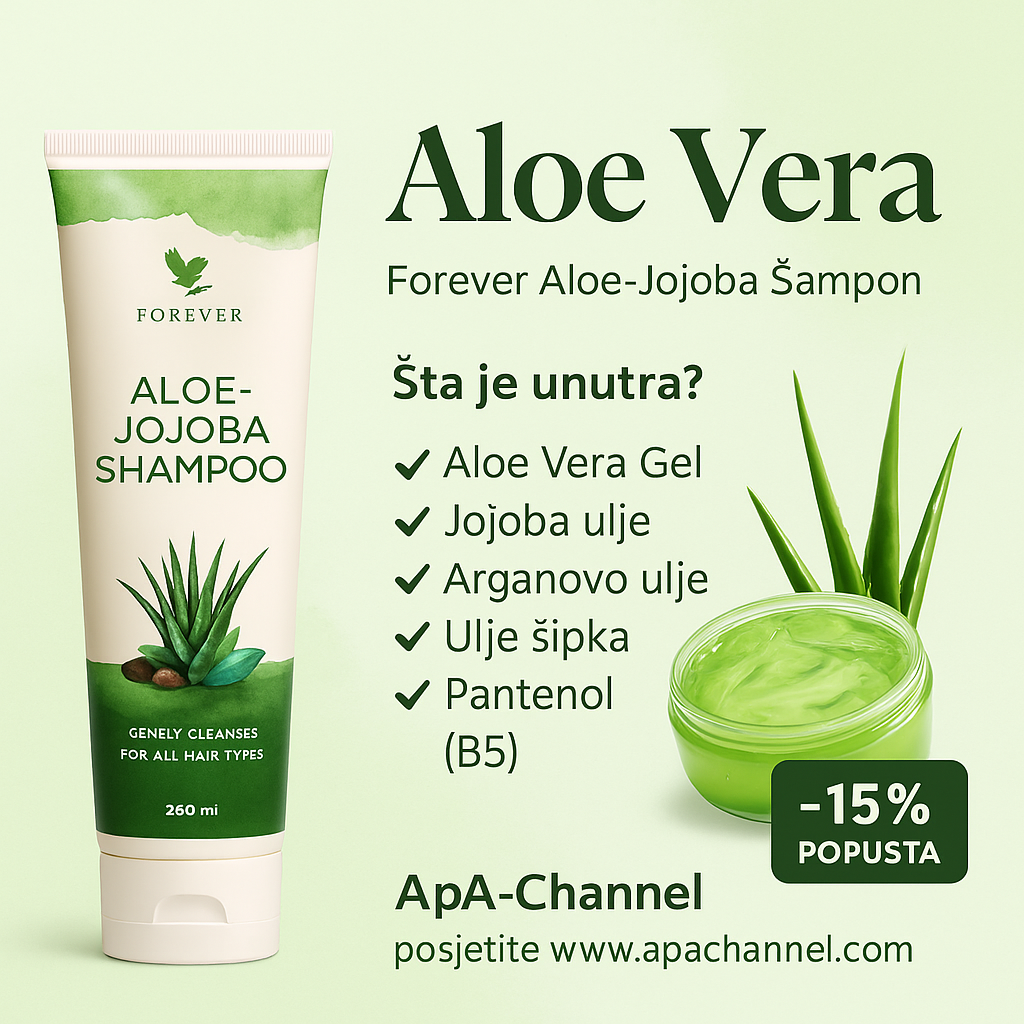
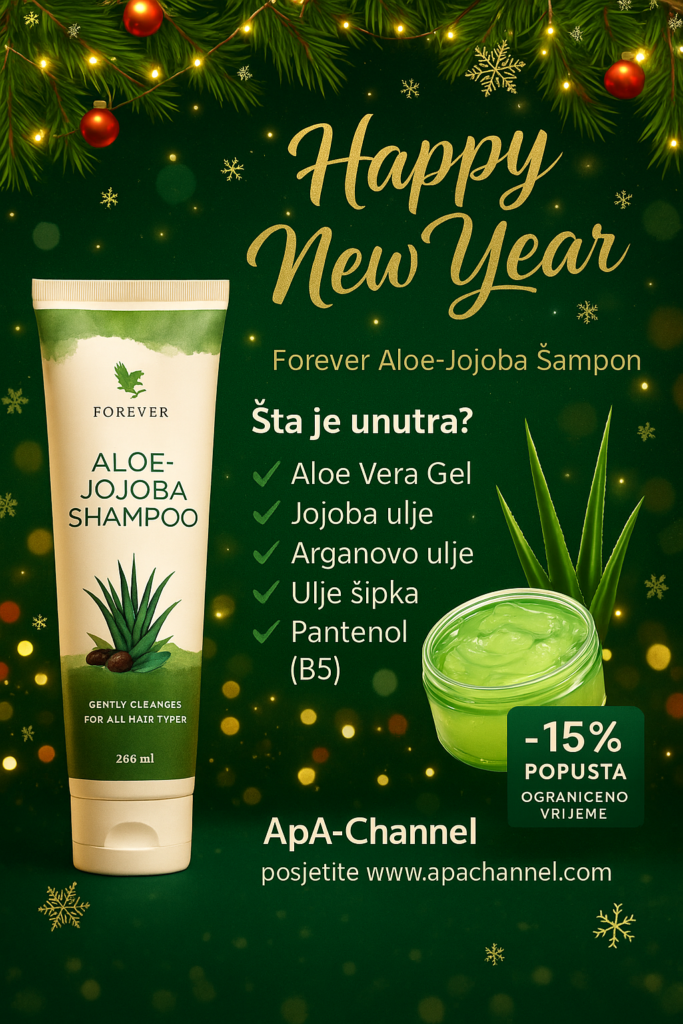
In the world of natural cosmetics, Aloe Jojoba Shampoo Forever Living has become synonymous with regeneration. In this article, we will analyze why the combination of pure Aloe Vera and jojoba oil is the “gold standard” your hair has been waiting for.
1. Scientific basis: The power of pure Aloe Vera
Unlike other brands that have water as the first ingredient, Forever Living uses stabilized Aloe vera gel as a base.
- Cleaning enzymes: Aloe vera contains proteolytic enzymes that naturally remove dead cells from the scalp, allowing the skin to breathe.
- Humidity: It penetrates deep into the hair follicle, providing hydration that does not weigh down the hair.
- PH Balance: Aloe vera has a pH value that is almost identical to that of our scalp ($pH \approx 4.5 – 5.5$), which prevents irritation.
A note from practice: Many users report that after switching to this shampoo, the oiliness of their hair has decreased, because the scalp no longer has to excessively secrete sebum to prevent dryness.
💡 Pro-Tip for hair health from the inside
While Aloe Jojoba Shampoo solves problems on the surface of the hair and scalp, true strength and shine come from within. Your body needs healthy fats so that hair follicles are strong and elastic. The best ally with external care is the intake of high-quality fatty acids. Read a detailed analysis of how to nourish your body (and hair) in our guide: https://apachannel.com/forever-omega-3-artic-sea/
2. Jojoba oil: A natural substitute for sebum
The other key player in this formula is jojoba oil. Jojoba is actually not an oil in the classical sense, but a liquid wax that is chemically most similar to human sebum.
- Hair protection: It creates a thin, invisible protective film that prevents moisture loss.
- Root strengthening: It is rich in vitamins B and E, and zinc, which are key for preventing hair loss.
- Easy detangling: Thanks to jojoba, the hair becomes smooth without the use of silicones that settle and suffocate the hair.
3. Why are "sulfate-free shampoos" the only right choice?
Most people do not understand what sulfates (SLS/SLES) are. These are cheap foaming agents, but they are so strong that they are also used to wash industrial floors.
Aloe Jojoba Shampoo is formulated without sulfates. Instead, natural saponins from plants are used.
- Advantage: It does not irritate the eyes and is gentle on the sensitive skin of children and people with dermatitis.
- Caution: Natural shampoos foam less when you first apply them. This doesn't mean they don't wash – it means they don't damage your hair.
4. In-depth analysis of ingredients (APA Standard)
In the spirit of professional analysis, it is important to note the other ingredients that complete this formula:
- Argan oil: Known as “liquid gold”, it adds shine and elasticity.
- Rosehip oil: It contains vitamin A and fatty acids that nourish the scalp.
- Vitamin C: It acts as an antioxidant that protects hair color from UV radiation.
5. How to properly use Aloe Jojoba Shampoo?
Many users make the mistake of treating this shampoo as an ordinary, commercial product. To get maximum results, follow these steps:
- Wet your hair completely: Sulfate-free shampoo needs more water to activate.
- First wash (Cleaning): Apply a small amount. There will be very little foam because the shampoo binds grease and impurities. Rinse.
- Second wash (Therapy): Reapply. You will notice a rich, creamy lather. Massage the scalp for 2-3 minutes so that the Aloe vera penetrates the skin.
- Thorough rinsing: Use lukewarm, never hot water.
6. User experiences: Real results
On our portal ApA-Channel we collected testimonials from people who used this shampoo for a minimum of 3 months:
- Dandruff problem: Users with dry dandruff noticed an improvement after only 3-4 washes.
- Recovery after dyeing: Women with bleached hair report that their hair has become less "straw" and that the ends are healthier for longer.
- Men and decline: Although not a cure for baldness, shampoo strengthens existing hair and reduces inflammatory processes that contribute to hair loss.
7. Comparison Chart: Commercial vs. Aloe Jojoba Shampoo
| Characteristic | Commercial shampoo | Aloe Jojoba Shampoo |
| Main ingredient | Water (Aqua) | Stabilized Aloe Vera Gel |
| Sulfate content | High (SLS/SLES) | 0% (Sulphate Free) |
| Effect on color | Washes out color quickly | Preserves color intensity |
| Long-term effect | Dries out hair | Nourishes and regenerates |
| Price per wash | Low (but consumes more) | Concentrated (lasts longer) |
8. APA Guide to Quality Analysis (Standardization)
When choosing any hair product, use ours APA test:
- A (Authentic): Does the product come from a verified source with certifications (IASC Aloe Purity Certificate)?
- P (Professional): Are the ingredients listed transparently and scientifically based?
- A (Actionable): Are there clear instructions on how to get the most out of the product?
Conclusion: Investment in health, not only in hygiene
Aloe Jojoba Shampoo is not the cheapest option on the market, but it is one of the most cost-effective. When you realize that one bottle can last you twice as long as regular shampoo due to its concentration, the price difference becomes negligible compared to the health of your scalp.
If you're ready to break the cycle of dryness and dandruff, it's time to give nature a chance to do what it does best.
Call to action (CTA)
Would you like to try Aloe Jojoba Shampoo and see the difference?
You can order your original copy directly through the official Forever Living link:
👉 Order Aloe Jojoba Shampoo Here
For more natural skincare tips and first-hand experiences, follow our Facebook page APA Channel.