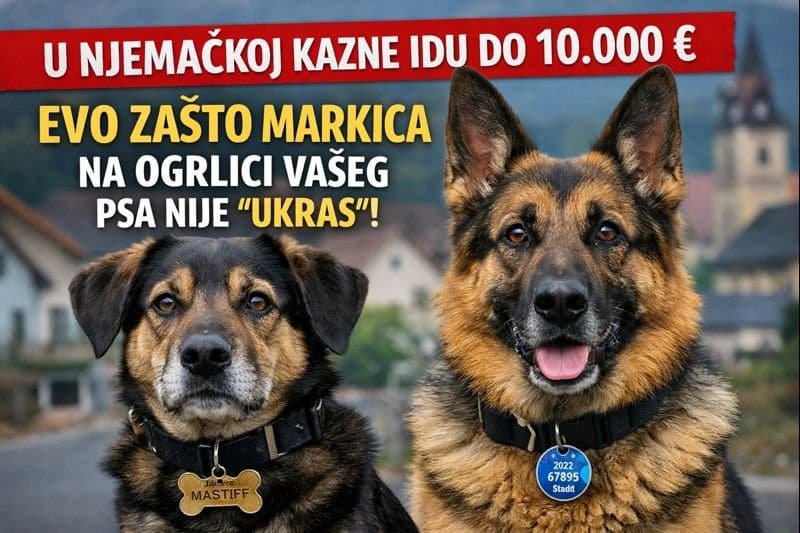
Germany's dog tax is one of the strictest local obligations for pet owners, and it's part of a system that surprises many only when the bill or fine arrives. Owning a dog in Germany is about much more than regular walks in the park and buying quality food. It's an obligation that's deeply embedded in the German administrative and tax system. Many owners, carried away by the emotions of adopting a pet, forget that the rules on keeping dogs in this country are among the strictest in Europe. While we see a loyal friend, the state sees a subject subject to taxation and strict safety regulations.
This one ApA guide explains in detail what the law says, why that little metal tag on your collar is crucial for your peace of mind, and how a single misspelled word on your return can change your annual tax bill by a whopping €800. Many owners only realize how it works after they have a problem. dog tax Germany.

🇩🇪 Dog tax Germany and legal obligations of owners
In Germany, owning a dog is considered a luxury, not a basic right. That's why it exists Dog tax (tax on dogs). What makes this tax specific is the fact that it is local tax (Municipal tax). This means that the money does not go to the federal budget, but directly to the municipality or city where you live.
This is precisely where the first trap for owners lies. Since each municipality makes its own rules, prices and fines vary drastically from place to place.
Rights and freedoms of municipalities in creating taxes:
- Tax amount: In some smaller villages, the tax can be a symbolic 30 euros, while in large cities like Munich or Hamburg it amounts to over 100 euros for the first dog.
- Progressive taxation: If you have two or three dogs, the tax for each subsequent dog is usually significantly higher than for the first.
- Breed categorization: Municipalities independently decide which breeds they consider "dangerous" or "fighting" (Listening dogs). For these dogs, taxes are punitive and can amount to over 1,000 euros per year.
The law is clear: It does not rely on how calm, socialized, or “good” your dog is. In the German system, only what is written on the papers counts.
Read more about life in Munich without filters in our guide to everyday life in Bavaria. https://apachannel.com/minhen-bez-filtera/
Dog tax Germany: Why is the tag on the collar not just an aesthetic addition?
When you complete the dog registration process, you will receive a small metal item in the mail – Dog tax stamp. Many owners find it annoying because it rattles or spoils the look of the necklace, but not wearing it can be the start of serious problems.
Official role of the stamp:
- Proof of registration: It is a visual certificate that the dog is registered in your municipality's database.
- Payment confirmation: Controllers in the field (often from Ordnungsamt) know immediately whether you have settled your obligations to the city.
- Quick identification: The tag contains a unique registration number. If the dog escapes, the finder or the police can immediately find out who the owner is using that number.
Important warning: Many owners put private plates with an engraved phone number on the necklace. Although it is commendable and useful, it does not legally replace an official tax stamp. As soon as you leave private property (house or yard), the official stamp must be visible on the dog.
⚖️ Dog tax Germany and fines: when the law gets expensive
The headlines in the media often sound sensational, but in Germany a fine of 10,000 euros really exists within the legal framework. To understand how that figure is arrived at, we need to distinguish between two types of offences.
1. Administrative negligence (Minor misdemeanor)
If you have properly registered your dog and are paying taxes, but you left the tag at home or lost it, and you are caught by an inspection, you will probably get away with a warning or a smaller fine than 10 to 50 euros. This is considered an administrative error.
For official information on dog tax and registration rules, see the city of Munich's website. Dog tax.https://stadt.muenchen.de/infos/hundesteuer.html
2. Tax evasion (Major misdemeanor)
If the dog is not registered in the system at all, you are not only committing a violation of animal laws, but you are also committing tax evasion. In that case, the municipality has the legal right to impose a fine of up to 10,000 euros. Although maximum amounts are rarely imposed (usually they are hundreds or a few thousand euros plus back taxes for all years), the very fear of such a penalty serves as a pressure to register the dog on time.
💶 Dog tax Germany: How our Pujdo became an "expensive sport"“
Here we come to a personal example that best illustrates how the system works. Our Nella, who is a purebred German shepherd, was registered without any problems. Its annual tax is approx 100 euros, which is a standard figure for most families in our area.
However, the situation with Pujdom, a dog we recently rescued, was completely different. An error occurred while applying online or filling out the form in a hurry. My wife listed under "breed" that it was a dog mastiff.
System dog tax Germany it is based on local municipal rules.
What happened in the system?
The German administration works on automatic. As soon as the word “Mastiff” entered the database, the system recognized it as a potential fighting dog from the “list.” The result? A decision has been made on the tax on incredible 900 euros per year.
Pujdo is, in fact, a mixed breed (probably with some traces of a mastiff, but far from a fighting dog), but the system doesn't care. In Germany, a dog's character plays no role in determining taxes – only the papers and the breed definition dictate the price.
🧾 How to correct an administrative error?
If you find yourself in a similar situation, do not panic, but act immediately. We have to make that call tomorrow and correct the mistake. Here are the steps everyone should take:
- Contact the municipality (Steueramt): Explain that there was an error entering the data.
- Provide evidence: The strongest assets are the passport for the dog (Pet ID card) or a certificate from a licensed veterinarian clearly stating that the dog is a “Mischling” (mixed breed) and not a fighting breed.
- Request a review: The municipality will make a correction in the system and send a new, corrected solution.
This is not a penalty, but an administrative correction, but it requires your time and commitment.
🧭 ApA roadmap: What to learn from this example?
The German system is not necessarily malicious, but it is extremely rigid. Before adopting a dog, do the following:
- Check the local price list: Type in Google “Hundesteuer + [name of your city]”.
- Pay attention to the forms: Be surgically precise when entering the breed. If you are not sure, write “Mischling”.
- Don't ignore the stamp: Always have her on the dog as soon as you cross the threshold of the home.
Owning a dog is a wonderful experience, but being informed is what separates you from enjoying your pet and stressing about an empty wallet.
❓ ApA questions for readers
Finally, we'd love to hear your stories:
- Verification: Have you ever checked how exactly your dog is registered in the municipal register?
- Price: How much is the tax in your city? Are there big differences compared to neighboring municipalities?
- Experience: Have you ever had an administrative error in Germany that unexpectedly cost you money?
Share your experiences in the comments - your story can save someone from a fine or excessive tax!
🚀 CTA (Call to Action)
👉 Follow ApA-Channel for more practical guides on living in Germany. We turn complicated laws into simple tips that protect your wallet.
👉 Share this text with friends who have dogs or are planning to adopt them - save them 800 euros with one click!