Something more than air
Positive and negative ions – invisible rulers of health and mood
Have you ever noticed how good you feel after a thunderstorm, next to a waterfall or on the seashore? That feeling of freshness and clarity of mind is not accidental. He is the result negative ions, invisible particles that play a key role in the quality of the air we breathe and, consequently, in our health and mood. In this ApA comprehensive guide, we will dive into the world positive and negative ions - how they arise, how they affect us and how we can actively use this knowledge to improve our own lives.

1. What are Ions and Why Are They Important?
Ions are atoms or molecules that have lost or gained an electron, giving them an electrical charge.
- Negative ions (anions): Atoms/molecules with an extra electron. Found in high concentrations in nature – forests, mountains, beaches, and especially around flowing water (waterfalls, rain). Considered the “vitamins of the air”.
- Positive ions (cations): Atoms/molecules that are missing an electron. They are caused by pollution, smoke, dust, and most importantly, electronic devices inside closed spaces.
Their importance lies in the fact that they naturally bind to particles in the air. Negative ions bind to pollution particles (dust, pollen, bacteria) and make them too heavy to stay in the air, so they fall to the floor.
2. Positive Ions: Invisible Pollutants
In urban, closed environments, they dominate positive ions. Although they do not feel like a danger, their excessive concentration can have numerous negative effects on the human body.
Main Sources of Positive Ions
- Air pollution and smog
- Central heating and air conditioning systems
- Electronic devices: computers, televisions, mobile phones
- Cigarette smoke and pollution from industry
Impact of Excessive Number of Positive Ions on Health
Important: Studies show that environments with high positive ions can cause breathing problems and affect mood.
- Physical symptoms: Headache, migraines, shortness of breath, fatigue, dizziness.
- Mental symptoms: Irritability, anxiety, loss of concentration, depressed mood.
- Allergies and Asthma: Positive ions can trap allergens and pollutants in the air, exacerbating respiratory problems.
ApA roadmap: If your mood suddenly worsens before a storm – you are probably reacting to an increased concentration of positive ions.
3. Negative Ions: Natural Refreshers and Healers
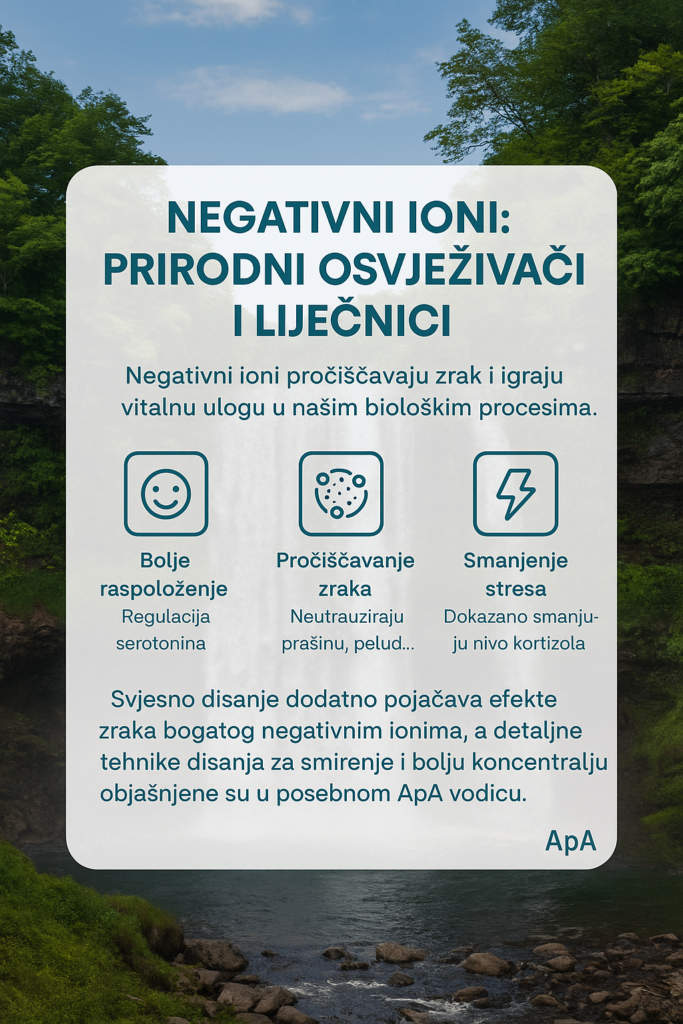
Negative ions are essentially a sign of a clean, healthy atmosphere. They purify the air and play a vital role in our biological processes.
How Negative Ions Work
When we breathe air rich in negative ions, they enter our bloodstream. It is believed that:
- Improves cilia function (tiny hairs in the trachea) that filter pollutants from the lungs.
- Increases oxygen flow into the brain, resulting in better alertness and reduced sleepiness.
- They affect serotonin levels (the happiness hormone), helping to lift your mood and reduce stress.
Health Benefits of Negative Ions
| Benefit | Mechanism of Action |
| Better Mood | Regulation of serotonin, reduction of seasonal depression. |
| Air Purification | They neutralize dust, pollen, bacteria and mold spores. |
| Stress Reduction | They have been proven to reduce cortisol levels (stress hormone). |
| Improved Sleep | They help the body relax and regulate sleep cycles. |
| Strengthening Immunity | They support the function of white blood cells. |
According to the explanations of the health portal Healthline, negative ions are most often created in nature by the action of water, such as rain, waves, and waterfalls, and have a potentially positive impact on air quality and mood. https://www.healthline.com/health/negative-ions#how-they-form
4. How to Increase the Presence of Negative Ions in Your Life
Given that we spend up to 90% of our time indoors, it is crucial to find ways to create a “negative-ion” environment.
A. Back to Nature (Best Source)
- Waterfalls and Rivers: Running water creates huge amounts of negative ions (up to 100,000 per cubic centimeter).
- Forests and Mountains: Physically going outside, especially after a rain or storm, drastically improves exposure.
- Sea Coast: Breaking waves on the shore releases high concentrations of negative ions.
B. Home and Office Refreshment
- Air Ionizers/Air Purifiers: These devices actively generate negative ions to neutralize pollutants. (Note: You should choose those that do not produce ozone).
- Himalayan Salt Lamps: Although their impact is not as dramatic as that of purifiers, they release a small amount of negative ions when heated.
- Open Window: Regular ventilation brings in fresh air and potentially higher concentrations of ions from outside.
- Showering/Bathing: The steam and running water in the bathroom are mini-waterfalls and increase the concentration of negative ions for a short time.
Conscious breathing further enhances the effects of air rich in negative ions, and detailed breathing techniques for calmness and better concentration are explained in a separate ApA guide. https://apachannel.com/tehnike-disanja/
Control the Invisible for a Better Life
Ions are an invisible force that constantly affects our vitality. By understanding the difference between tiring positive ions and energizing negative ions, you take control of the quality of the air you breathe. While you can't avoid electronics, you can consciously introduce sources of negative ions into your everyday life – whether it's regular outdoor activities, installing an ionizer, or simply taking a shower. Let negative ions become your ally in achieving better health, a clearer mind and a brighter mood.
What questions?
- Have you noticed a difference in your mood or energy when you're in nature versus indoors?
- What is your favorite way to increase your exposure to negative ions in your daily life – taking a walk in nature, airing out your space, or breathing consciously?
- Can understanding the impact of positive and negative ions change the way you decorate your home or workspace?