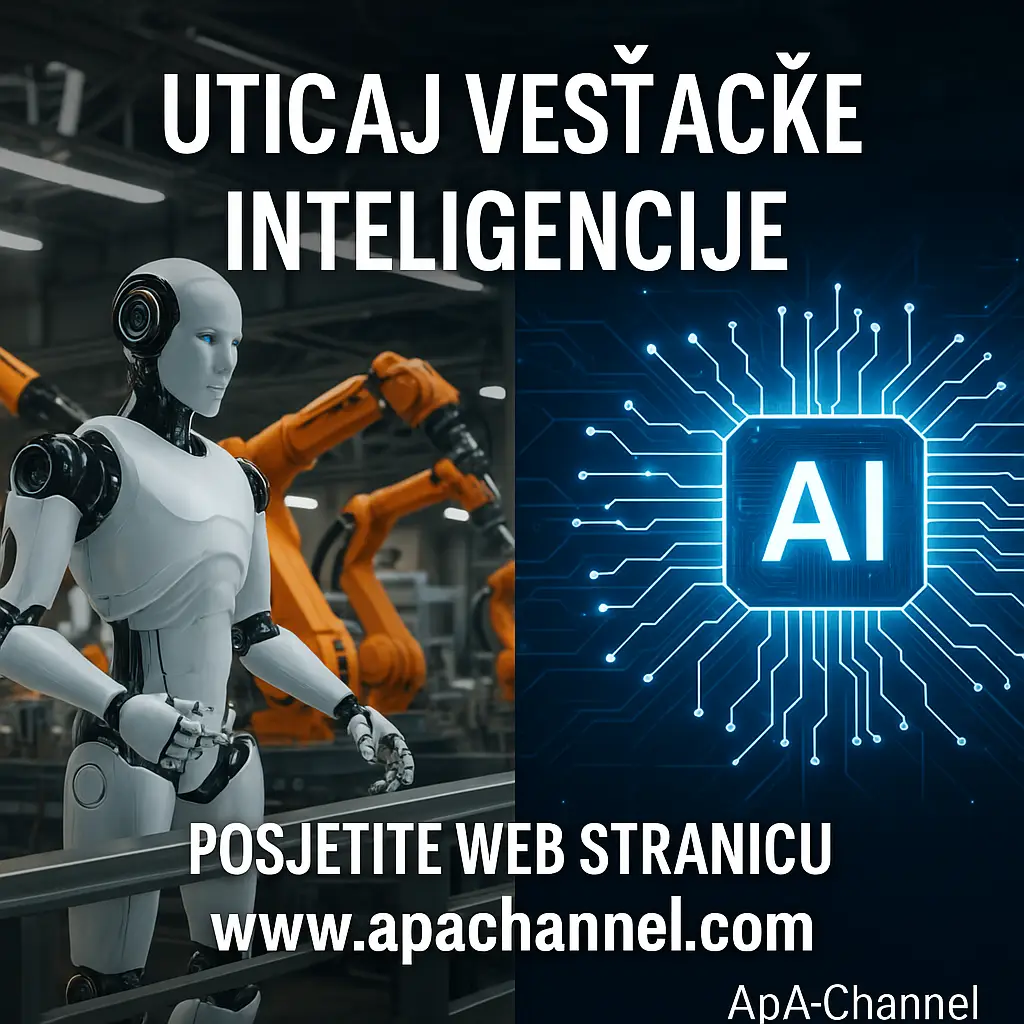
The impact of artificial intelligence is becoming crucial in the modern world, as AI increasingly shapes industry, society, and everyday life. In this article, we explore the main benefits, challenges, ethical issues, and future of this revolutionary technology.
“Artificial intelligence is a tool — how we use it determines whether the future will be better or darker.”
1. Advancement of technology and industry
Artificial intelligence is driving a new era of Industry 4.0, accelerating automation, reducing costs, and increasing efficiency.
Automation and robotics
- AI-controlled industrial robots optimize production lines
- Reduces errors
- They learn from data.
- Increases the quality and speed of work
AI in the service sector
Chatbots and virtual assistants:
- they provide 24/7 customer support
- reduce worker workload
- speed up the processing of requests

2. Revolution in healthcare
AI is completely changing diagnostics, analytics and medical data processing.
Early detection of disease
Algorithms recognize patterns in medical images that the human eye often cannot see — especially in:
- oncology
- radiology
- cardiology
Personalized medicine
AI predicts patient reactions, the risk of complications, and detects optimal therapies.
3. Improving education
Personalized learning
AI systems monitor students' progress and adapt teaching content to their needs.
The result: more efficient, faster and more motivated learning.
Performance analysis
AI identifies areas where students are struggling, so teachers can intervene more quickly.
If you want to improve focus and mental energy, also check out our guide on aloe vera as a natural miracle for health and beauty.https://apachannel.com/aloja-vera-prirodno-cudo-za-svakodnevno-zdravlje-i-ljepotu-🌿/
4. Challenges and ethical dilemmas of AI
Although AI brings great benefits, it raises serious ethical questions.
Algorithm bias
If trained on bad data, AI models can make discriminatory decisions.
Transparency
Most advanced AI models function as a „black box“ — it is not clear how they make decisions.
Responsibility
Who's to blame when AI goes wrong? Company, developer or user?
According to the definition from Wikipedia:https://en.wikipedia.org/wiki/Artificial_intelligence
5. AI and the labor market
Jobs being created
- AI engineers
- data analysts
- cyber security experts
- maintenance of intelligent systems
Disappearing jobs
The risk includes all occupations based on repetitive tasks.
6. Privacy and data security
Security risks
AI uses massive amounts of data — which opens up space for:
- hacker attacks
- misuse of private information
- unauthorized surveillance
How to protect privacy
- transparent policies
- encryption
- clear user permissions
7. The future of artificial intelligence
Positive trends
- smart cities
- autonomous vehicles
- advanced medicine
Potential risks
- technological dependence
- abuse in geopolitics
- AI that surpasses human intelligence
Conclusion
Artificial intelligence is bringing about the greatest technological transformation in history. If we use it responsibly, AI can produce the most advanced society that man has ever known.